
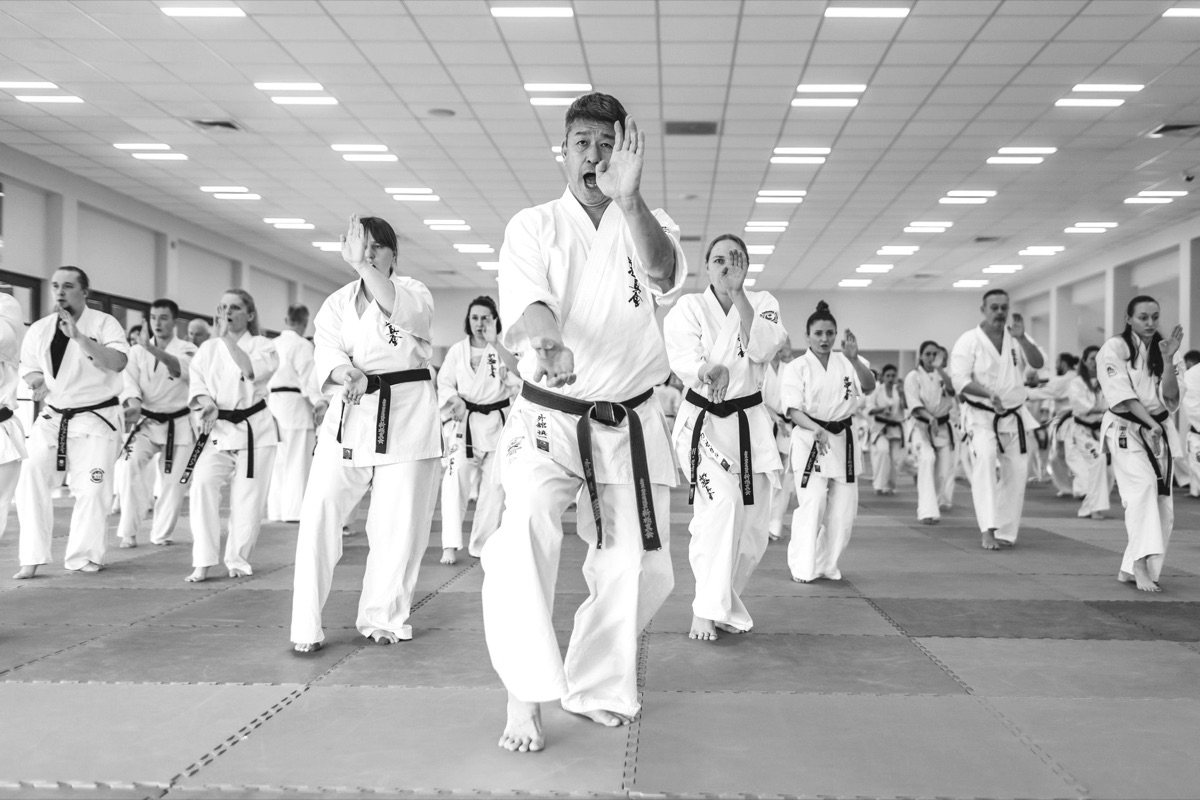
Kyokushin Karate builds strong all-round fitness, mental resilience and self-confidence, and gives you a place in a dojo community that often feels like a second family. Because training is demanding and includes full-contact kumite, many of its benefits come from learning to stay calm, focused and respectful under real pressure. Those benefits grow with consistent training over months and years, not after a few classes.
What makes Kyokushin different
Kyokushin was founded by Masutatsu (Mas) Oyama, who formally established the Kyokushin organisation in 1964. The name is usually translated as "the ultimate truth".
Three things shape the Kyokushin experience:
- Full-contact kumite (sparring). In knockdown competition, strikes are delivered with real force and fighters train to give and take contact. Most dojos introduce contact gradually and adapt it to age, level and goals.
- Hard, honest conditioning. Push-ups, squats, core work and body conditioning are part of most classes.
- Kihon and kata as the foundation. Basic techniques (kihon) and forms (kata) are practised from the first class to black belt and beyond.
Many karate styles offer some of these elements. In Kyokushin they come together in one demanding training culture, and that is where most of its benefits come from.
Physical benefits
All-round fitness. Kyokushin is a whole-body workout. A typical class combines cardio, strength, mobility and coordination, and trains the whole body more or less equally: arms and legs, core and back, endurance and flexibility.
Coordination and balance. Kihon and kata teach you to move the whole body as one unit: rotating the hips, stepping into stances, coordinating both arms. Kicks and turns challenge your balance in ways few other sports do.
A robust body. Conditioning and controlled contact gradually make the body more resilient. This is something that is built carefully over years, under the guidance of an experienced instructor, never forced.
Fitness with a purpose. Many people find it easier to keep training when every exercise has a reason: you stretch to kick higher, you condition to absorb contact, you repeat kata to make it yours. The grading system adds clear goals along the way. Children and adults alike always know what they are working towards next, from their first belt to black belt and beyond. That sense of purpose is one of the main reasons people stay with Kyokushin for decades.
Mental benefits
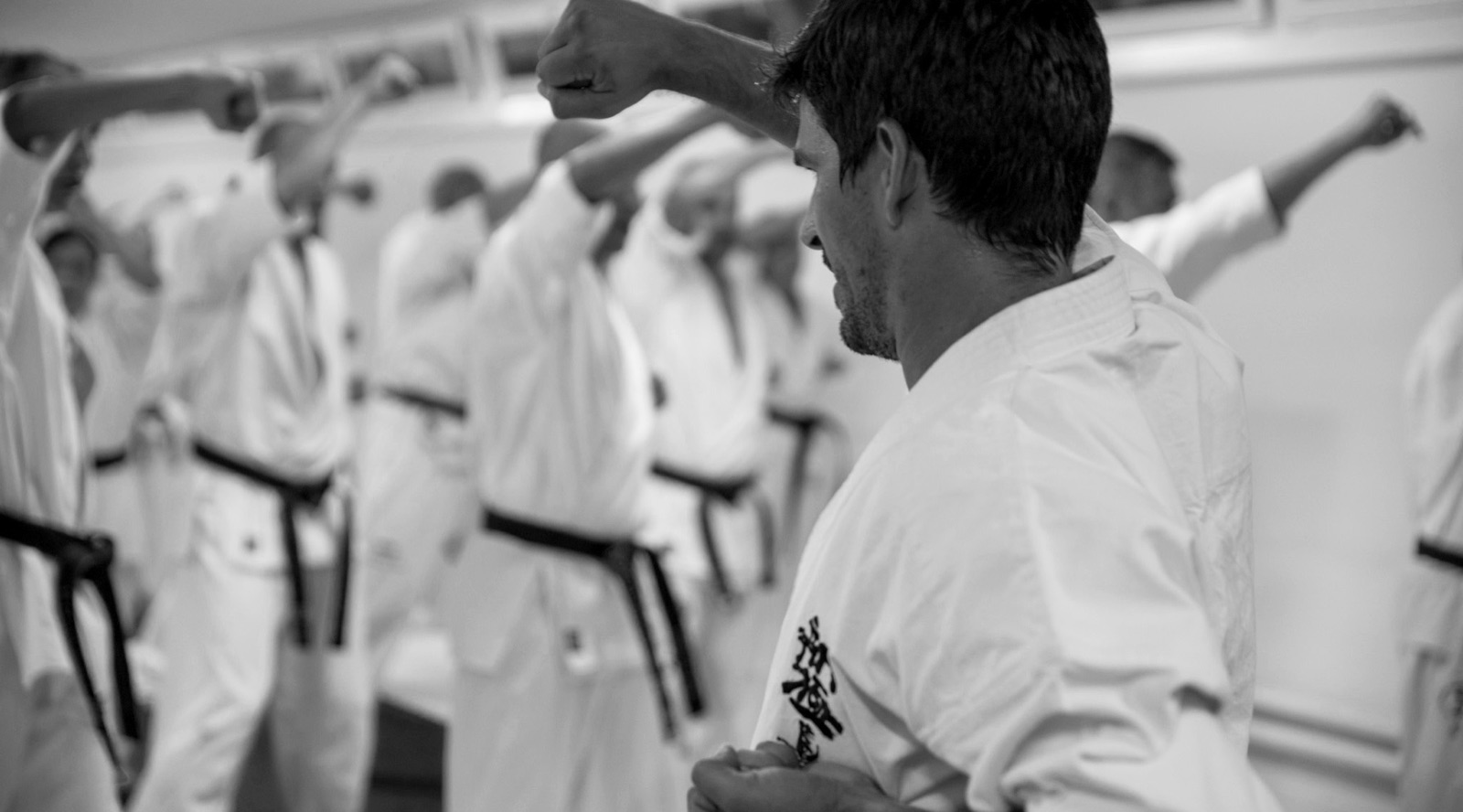
Perseverance. Kyokushin regularly asks you to continue when you are tired. Learning that you can do more than you thought is one of the most frequently mentioned benefits among karateka, and it carries over into work, study and daily life.
Calm under pressure. Kumite teaches you to stay focused while someone is coming forward. Gradings and tournaments teach you to perform when nervous. Both build a kind of composure that is hard to train anywhere else.
Focus and self-control. Precise kihon, controlled techniques and respectful sparring all require you to manage your own energy and emotions.
Confidence that is earned. Confidence in Kyokushin does not come from being told you are good. It comes from slowly mastering things that once felt impossible, belt by belt.
"What fascinates me most about Kyokushin karate is the mental resilience it gives you. All the benefits we find through karate can be carried over to our daily life, to our work, even to other sports. Above all, that ability to overcome and adapt to chaos is what I value most about Kyokushin."
Hugo Cruz Senpai, All Japan IKON Champion, KWF World Champion and dojoHUB instructor
In the full interview, Hugo Cruz talks about his Kyokushin journey, resilience and how he deals with defeat.
What does research say? Studies on martial arts and mental health are still limited, and most are small. A 2020 systematic review and meta-analysis found small to medium positive effects of martial arts training on wellbeing and on internalising symptoms such as anxiety and low mood. A randomised study in primary schools found that children in a martial arts programme improved more in self-regulation and classroom behaviour than a comparison group. These studies were not specific to Kyokushin, but they support what many karateka experience.
Character and values
Kyokushin is more than physical training. The Dojo Kun, the dojo oath recited at the end of class in many Kyokushin dojos, speaks of training heart and body, pursuing the true meaning of the martial way, courtesy, respect for others and refraining from violence.
In practice, these values show up in small, daily things: bowing when entering the dojo, helping a training partner, controlling a technique when your partner is tired, and accepting correction from your Sensei. Over time, these habits shape how you treat people outside the dojo too.
Many karateka describe the spirit of Osu as patience and perseverance under pressure: continuing, respectfully, even when it is hard.
Community
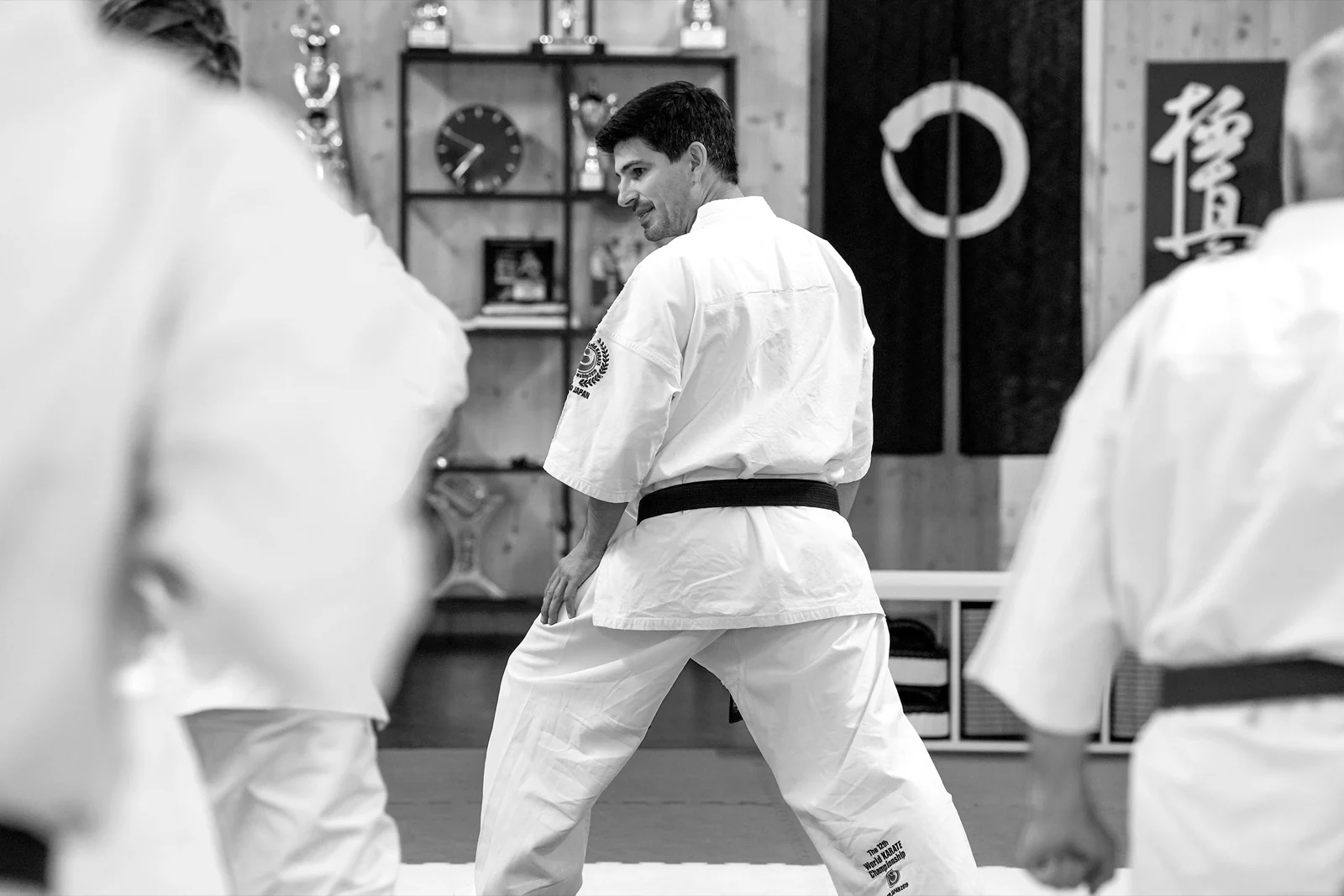
Training side by side, sharing hard sessions and supporting each other at gradings creates strong bonds. Many karateka say their dojo feels like a second family.
Kyokushin is also a worldwide community. At seminars, camps and tournaments, karateka from different countries and organisations train together. Techniques and terminology can differ, but the shared Kyokushin spirit is immediately recognisable.
Kyokushin for children, teenagers and adults
Children learn discipline, coordination, respect and how to handle both success and setbacks. Good children's programmes adapt contact and intensity to age, and focus on fun, technique and character.
Teenagers often find a healthy outlet for energy, a group to belong to, and goals to work towards with every grading.
Adults can start Kyokushin at any age. Many beginners start in their thirties, forties or later. Talk with your instructor about your fitness, previous injuries and goals, and build intensity gradually.
The challenges: what Kyokushin asks of you
An honest look at the benefits also includes the demands:
- Training is hard. That is part of its value, but it takes time to adapt. Be patient with yourself in the first months.
- There is a risk of injury, as in any contact sport. Good instruction, proper warm-ups, gradual progression and protective equipment in training reduce that risk. Just as important: learn to listen to your own body, and know when to push and when to hold back.
- The dojo matters. Look for a qualified instructor, a safe and respectful training culture, and a dojo where beginners are supported rather than overwhelmed. A trial class is the best way to find out.
- Progress takes years. The path to black belt is long. Most of the benefits come from the journey itself, not from reaching a particular rank.
How to get the most from your Kyokushin training
- Train regularly. Two or three classes a week bring steady progress.
- Listen to your Sensei. Your instructor sees your training in person and knows the requirements of your dojo and organisation.
- Practise between classes. Short, focused sessions at home help you remember and refine what you learned in the dojo. Read our guide on how to practise Kyokushin between dojo sessions.
- Rest and recover. Sleep, nutrition and recovery are part of training.
- Stay curious. Ask questions, attend seminars and train with people from other dojos when you have the chance.
Kyokushin is not something you finish. It is a path you keep walking, and every class, every grading and every hard session adds something to who you are, on and off the tatami.