
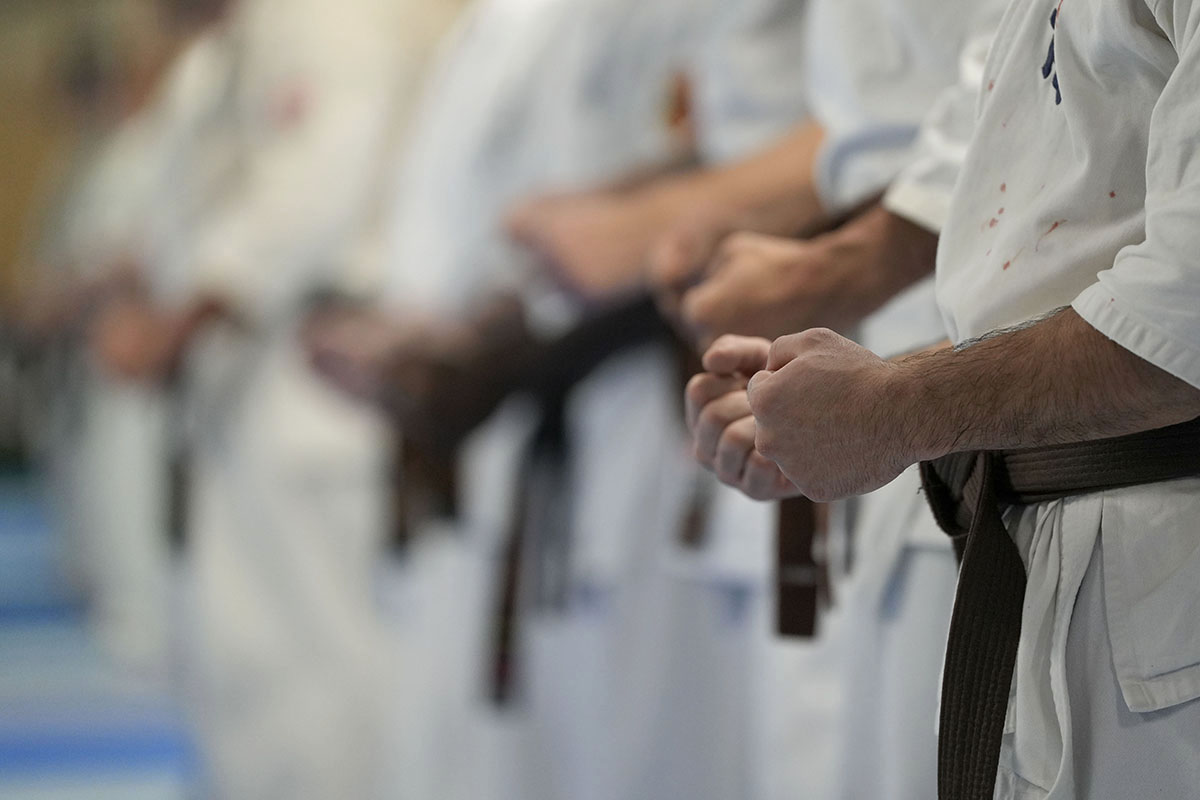
Yes, you can practise Kyokushin Karate at home or elsewhere between dojo sessions. Its most useful purpose is not to teach yourself everything alone, but to remember, repeat and better understand what you have already learned in the dojo.
Independent practice can strengthen your memory, develop physical qualities and reveal what remains unclear. However, technical refinement still requires correction, while kumite needs partners who can respond and apply pressure. Training between classes should therefore support your Sensei’s instruction rather than trying to replace it.
What can you practise between dojo sessions?
Some aspects of Kyokushin lend themselves well to independent repetition. Others depend on direct guidance, a training partner or the shared environment of a dojo.
| Useful areas for independent practice | Areas that still require direct guidance or a partner |
|---|---|
| Reviewing familiar kihon, including techniques from previous grades | Personal technical correction in kihon, kata and kumite |
| Repeating known kata, either as complete sequences or in smaller sections | Learning new techniques, unfamiliar movements or complex sequences |
| Reviewing familiar kumite combinations, techniques and footwork | Distance, reactions and contact with a partner |
| Balance, mobility, flexibility and physical preparation | Real kumite timing, pressure and decision-making |
| Learning the names and structure of your grading syllabus | Confirming the technical and grading requirements of your own dojo or organisation |
| Taking notes and identifying questions | Training in a group or performing under observation |
This distinction is important. Independent practice is particularly useful for repetition and memory. The dojo is where those repetitions can be observed, corrected and developed further.
Home practice cannot recreate the dojo
A dojo offers much more than a suitable room in which to perform techniques.
Training alongside other karateka creates a shared rhythm and sense of purpose. There are days when personal motivation is limited, but the presence of the group still helps us train. We learn by observing others, working with different partners and practising while a Sensei is watching.
The relationship with a Sensei is also a special part of the Kyokushin journey. A Sensei does more than explain individual techniques. They observe development over time, recognise habits the student may not notice and understand when to challenge, correct or encourage them.
Practising in a group or performing kata in front of others also creates a different kind of pressure. It teaches us to remain focused when we are being observed, to adapt to the rhythm of a class and, where appropriate, to move together with other students. These experiences cannot be recreated fully at home.
Independent training can help us arrive at the dojo better prepared, but the instruction, relationships, atmosphere and shared effort of the dojo remain irreplaceable.
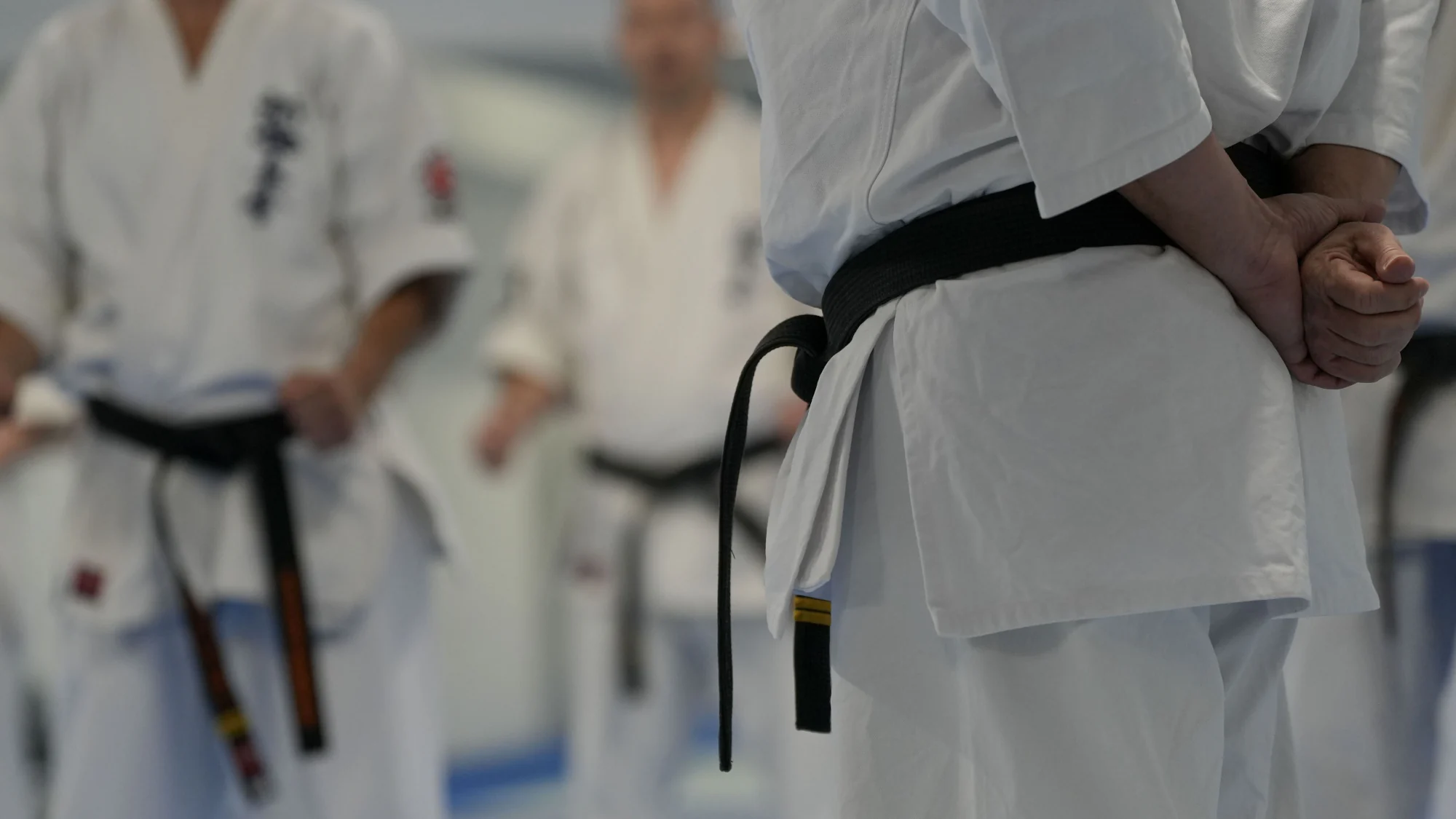
Review kihon to strengthen your memory
Kihon means basic techniques. When practising at home, it can be useful to review the techniques taught in the most recent class as well as techniques from previous grades.
This repetition helps keep movements and terminology familiar. It can be particularly valuable when preparing for a grading, where students may need to remember material learned months or even years earlier.
Choose a technique, stance or short combination that your Sensei has already taught. Work slowly enough to remain aware of what you are doing. You might focus on remembering the order, coordinating the movement or recalling the correct Japanese name.
The purpose is not to redesign the technique or make large technical corrections by yourself. A mirror or recording may help you notice visible details, but it cannot replace an experienced person observing your movement from different angles.
The technical fine-tuning should return to the dojo. The repetition can take place at home.
Practise kata for memory and understanding
Kata is especially suitable for independent review because memory plays such an important role.
Performing the complete kata can help you remember its overall sequence, directions and rhythm. However, practising the whole kata every time is not always the most effective approach.
You can also select one turn, stance change, combination or transition. Review the individual movements, check the direction and then connect the section to what comes before and after it.
Breaking a kata into smaller parts can help you understand where uncertainty begins. Perhaps you remember the individual techniques but lose the sequence after a turn. Perhaps the direction is clear, but the transition between two stances is not. These are useful observations to bring back to your Sensei.
Example: An Polimeno breaks down a single turn from Taikyoku Sono Ichi, the kind of small section you can practise on its own between classes.
Can you learn kata at home?
It is possible to review a kata at home once it has been introduced in the dojo. Trusted resources can help you revisit the sequence and examine individual movements at your own pace.
Learning a completely unfamiliar kata without personal guidance is more difficult, regardless of grade. A video can show the sequence, but it cannot see whether you have misunderstood a movement or applied the details expected by your own instructor or organisation.
The dojoHUB step-by-step kata section can be used to revisit individual movements and transitions. It should be treated as a structured learning resource alongside regular training, not as a replacement for personal correction.
Recognised variations exist among Kyokushin instructors, dojos and organisations. When details differ, follow the version taught by your own Sensei.
What kumite training can you do alone?
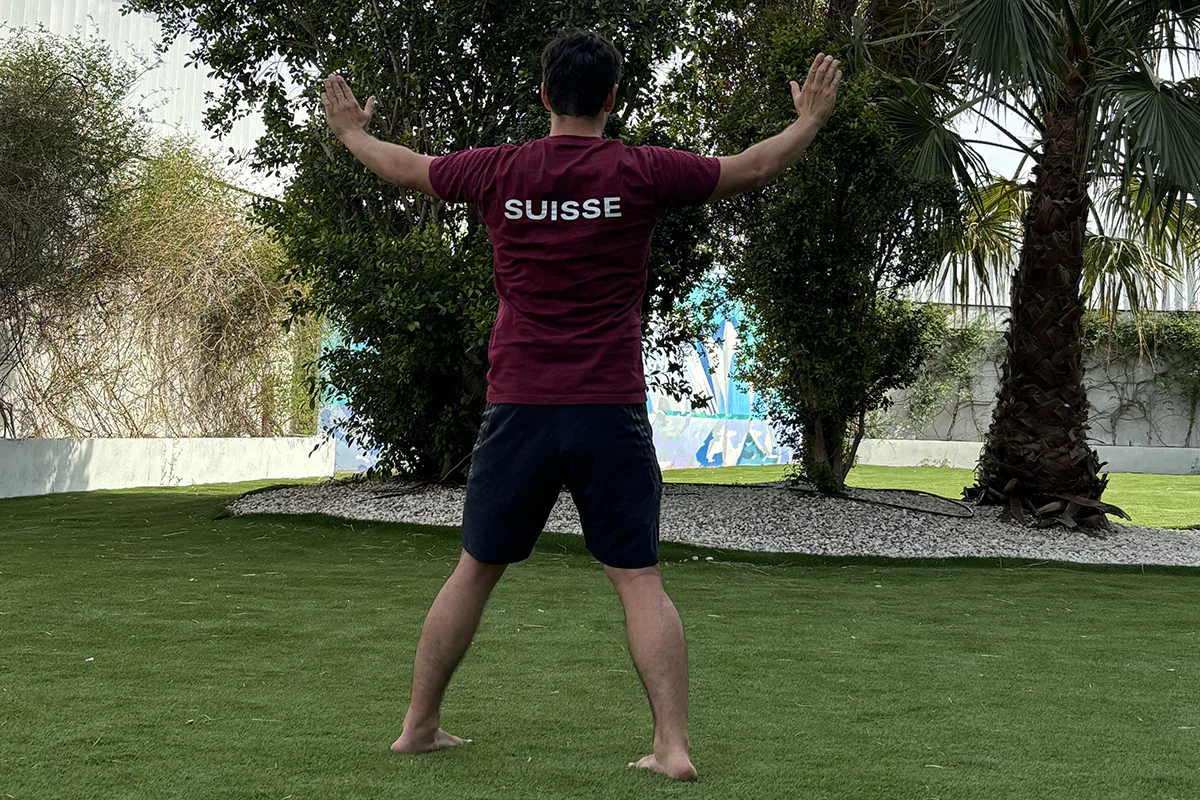
Parts of kumite can be reviewed independently. You can practise familiar combinations, individual techniques, footwork and changes of direction. Controlled shadow training can also help you recall movements and explore how techniques connect.
If you have suitable equipment and know how to use it safely, bag training may provide another way to repeat familiar techniques and combinations.
However, solo training cannot reproduce an opponent who changes distance, disrupts your rhythm, reacts unexpectedly or applies pressure. It cannot teach you how to recognise an opening or adjust when a technique is blocked, avoided or countered.
Solo kumite practice can support your preparation, but it is not kumite itself. Partner drills and sparring under appropriate instruction remain essential for developing distance, timing, reactions, control and decision-making.
Learn the names and structure of your syllabus
Training between classes does not always need to involve physical repetition.
Learning the Japanese names of techniques, stances and movements can make it easier to follow instructions in the dojo. You can also review the structure of your grading syllabus and identify which material belongs to your current and previous grades.
The Kyokushin Kihon Booklet can serve as a structured reference for reviewing kihon terminology and grading content. However, grading requirements and technical details may differ between organisations and dojos. Always use the syllabus and instructions provided by your own Sensei as the final reference.
Support your Kyokushin with physical preparation
Balance, mobility, flexibility, strength and conditioning can all support Kyokushin training.
The appropriate type and intensity of training depend on your experience, health, goals, dojo schedule and recovery. Additional training should help you return to the dojo ready to practise rather than leaving you continuously tired or unable to perform well in class.
If you are unsure which physical preparation is appropriate for you, ask your Sensei or a suitably qualified professional.
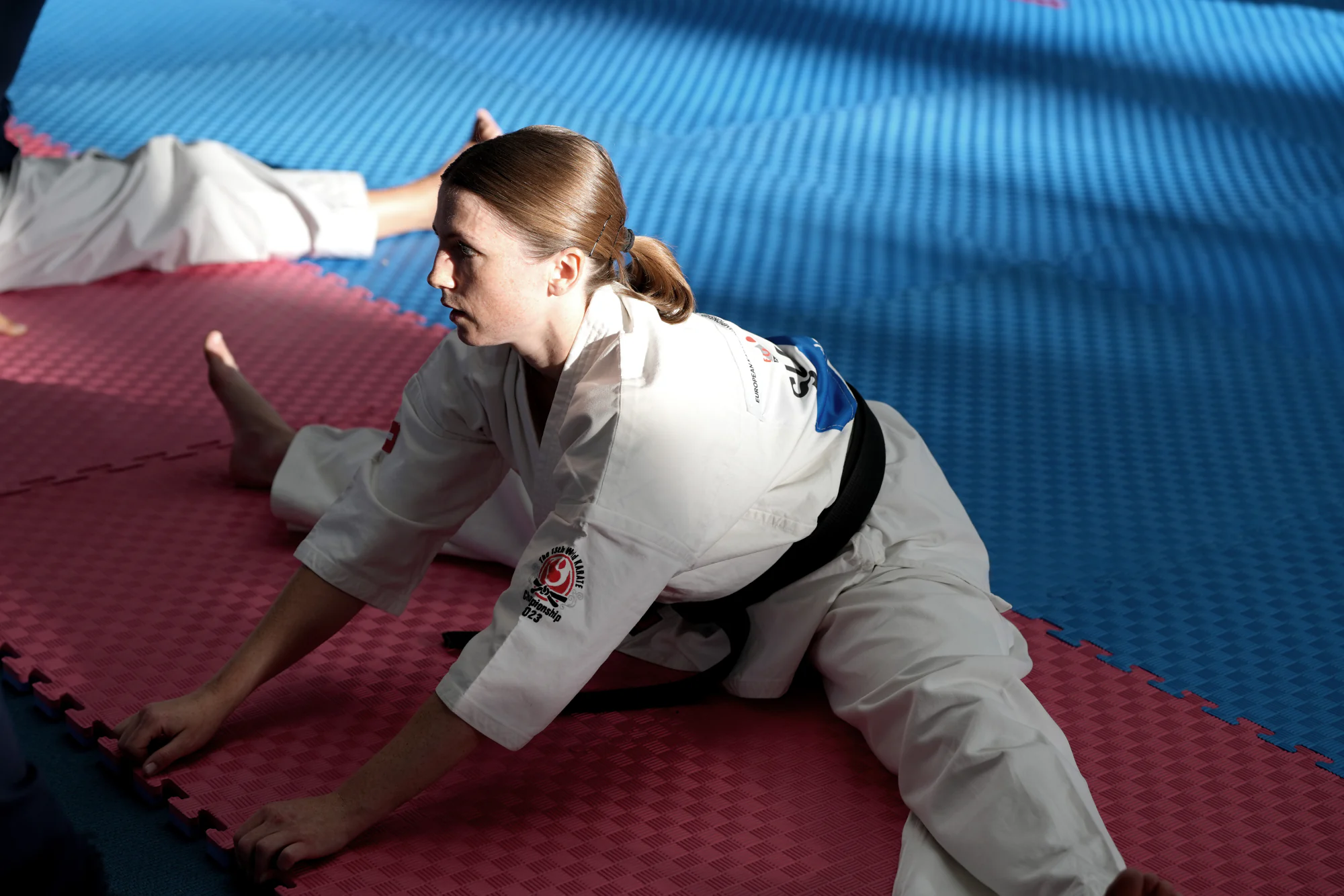
How can you avoid repeating mistakes?
Every karateka makes mistakes, both inside and outside the dojo. The aim is not to make independent practice perfect, but to avoid repeating movements without attention.
Start with material that you have already been taught. Keep the purpose of the session narrow and slow the movement down when you are uncertain.
Notes, recordings and structured learning resources can help you remember what you have seen. They can also make it easier to compare a movement with the version demonstrated by your Sensei. However, they cannot confirm everything you may be doing.
If something feels unclear, resist the temptation to invent an answer. Write down the question and bring it to your next class. Remaining open to correction is more valuable than becoming attached to something you have repeatedly practised incorrectly.
What should a short practice include?
A useful practice between dojo sessions does not need to reproduce an entire class.
Begin by deciding what you want to review. It might be a technique from the previous session, material from an earlier grade, a difficult kata transition, familiar kumite footwork or the names within your syllabus.
Prepare your body gradually, spend most of the available time on that clearly defined focus and finish by considering what felt clear and what still needs attention. Depending on the subject and your available time, a focused practice may last approximately 15–30 minutes.
Trying to include kihon, kata, kumite, strength, flexibility and conditioning in every short session can make the practice rushed and unfocused. It is often more useful to work carefully on one area.
How often should you practise between classes?
There is no single frequency that suits every karateka. Your dojo schedule, experience, physical condition, goals and other responsibilities all matter.
For many people, a few short and focused practices are more realistic than occasionally attempting a very long additional session. Consistency helps keep recent lessons and older material familiar.
However, consistency does not mean training through pain, neglecting recovery or practising simply to complete a schedule. Independent training should fit alongside regular dojo sessions and everyday life.
Bring your questions back to the dojo
Independent practice becomes most valuable when it connects back to the dojo.
Ask about the movement that remained unclear. Show your Sensei the transition you reviewed or explain where you lost the sequence. Accept that a familiar movement may need to be adjusted once someone observes it closely.
This creates a useful cycle: learn in the dojo, repeat independently, notice uncertainty and return with better questions.
Training between dojo sessions cannot replace the teaching, correction, relationships or atmosphere found in the dojo. Done thoughtfully, however, it can help you remember what you have learned and make better use of the time you spend there.
Curious what consistent training gives you in the long run? Read about the benefits of Kyokushin Karate.